In My 4th Grade Teacher Era: A Designer's Real-World Review
First Impression: Whimsy with a Touch of Nostalgia
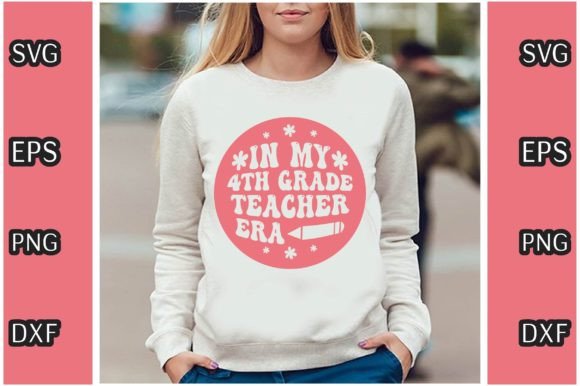
When I first opened In My 4th Grade Teacher Era, the immediate feeling was a playful, lighthearted nostalgia. The phrase itself carries a certain mood—it’s not overly sentimental, but it taps into that specific, cherished time in a teacher’s career, or even for anyone fondly remembering their own fourth-grade year. As a designer looking at this as a graphics file, the layout and typography suggested a straightforward, clean design personality. It feels approachable, not overly detailed or fussy, which from an embroidery standpoint is a great starting point. This isn't a complex illustrative piece; it's a statement. That tells me it naturally belongs on projects where the message is the star: custom apparel, tote bags, aprons, or simple decor where the text needs to be clear and engaging.
Thinking Through a Real Project: The Teacher Appreciation Tote
Let’s walk through a real scenario. I’m considering this for a batch of teacher appreciation tote bags for a local school’s PTA. The goal is a handmade, personalized gift that feels special but isn’t overly time-consuming to produce. Using In My 4th Grade Teacher Era as an embroidery design, I visualize it centered on a sturdy canvas tote. The clean lines of the provided file formats, like SVG and PNG, mean I can easily scale it to a size that’s prominent but not overwhelming. My immediate concern shifts to stitch density—how will those letters look when translated from a digital graphic into satin or fill stitches? Will the smaller details, if any, retain their clarity? The high-resolution nature of the files is promising, but the real test is on the machine.
Performance Across Different Embroidery Situations
This design’s strength is its versatility within a specific niche. For custom apparel like sweatshirts or t-shirts, it acts as a fun, personal identifier. On a simple cotton sweatshirt, with good stabilizer, it should stitch out cleanly, creating a product that feels both handmade and professional. For small business merchandise, say for an Etsy seller focusing on teacher gifts or school-related items, it could be a charming addition to pillow covers or tea towels. I’d also consider it for baby items in a different context—perhaps embroidered on a little blanket as a gift from a fourth-grade teacher to a new parent, adding a unique, personal touch.
Where In My 4th Grade Teacher Era could really shine is in embroidered patches. The design’s likely bold lettering makes it ideal for a standalone patch that can be applied to bags, jackets, or lanyards. This transforms it from a direct garment decoration into a versatile craft business product. For digital product sellers, the included PNG file is perfect for creating printable mockups to showcase the finished product in listings, helping potential buyers visualize the item.
Caution Areas: Where to Proceed with Care
Despite its seeming simplicity, there are always considerations. On small hoop sizes, if the design is scaled down too much, any lettering detail could become lost or muddy, especially if the original design has thin elements. Textured or stretchy fabrics, like certain knits for caps, require extra stabilization and perhaps a redesign of stitch types to prevent distortion. I would be particularly careful with dark fabric backgrounds. The visual appeal hinges on thread color contrast; a poor choice here could make the statement fade into the garment. Similarly, on curved surfaces like caps, the layout might need adjustment to fit the shape properly without awkward gaps or crowded corners.
Products that need frequent washing, like kitchen towels or baby clothes, demand a robust stitch construction. Before committing, I’d test the stitch density on scrap fabric to ensure it can withstand wear without fraying. This is a crucial step for maintaining customer trust and the professionalism of your handmade products.
The Impact on Your Craft and Business
Using a well-executed design like this affects more than just the stitch quality. It enhances product value. A clean, recognizable embroidery design on a tote bag or sweatshirt elevates it from a generic item to a thoughtful, personalized gift. For a small shop owner, consistency in the quality of your embroidery files contributes to brand consistency. If this design stitches out clearly and reliably across multiple products, it builds a reputation for quality.
The giftability and recognition are high. “In My 4th Grade Teacher Era” is a phrase with immediate resonance for a specific audience. That means your finished product isn’t just another embroidered item; it’s a conversation piece with emotional appeal. This directly boosts buyer engagement in your Etsy listings or at craft fairs.
Practical Notes for the Embroidery Designer
Before loading this digital embroidery file into your machine, treat it like any new design. Always test on scrap fabric first, using the same material and stabilizer you plan for the final project. This reveals everything: how the stitch density behaves, whether small details are crisp, and if the chosen thread colors pop against your background. Since the product description lists it as a Freebies item in the Graphics category, it’s essential to confirm licensing before selling finished items or commercial embroidery projects. The description doesn’t specify license terms, so you must verify that your intended use—whether for personal gifts or commercial embroidery for your craft business—is permitted.
Check the design in both black and white mockups, and compare how it would look on light and dark fabric texture. This helps plan your thread palette. Given the file formats provided (SVG, DXF, EPS, PNG), you have flexibility for different software and applications, but for machine embroidery, you’ll likely be converting or using one as a template. Ensure your hoop size can accommodate the design at the scale you want without unnecessary repositioning.
In summary, In My 4th Grade Teacher Era presents a charming, straightforward concept that, with proper embroidery preparation, can become a standout element on a range of projects. Its success hinges on your due diligence as a designer: testing, adjusting for context, and ensuring it meets the practical demands of the fabric and the commercial goals of your business. When done right, it’s a design that feels both personal and professional, exactly what makers and small business owners need to create products that resonate.